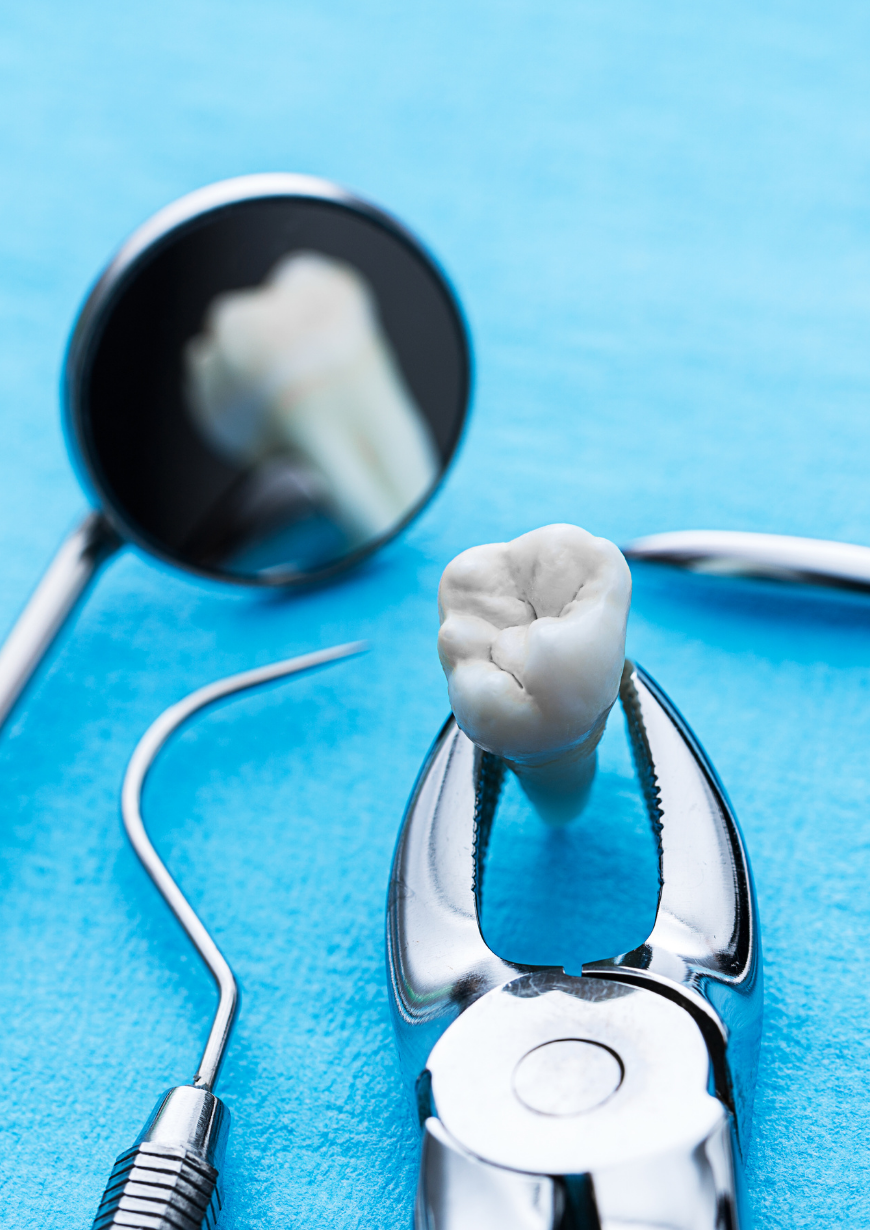
What is Tooth Extraction?
Tooth extraction is the process of removing teeth that are too damaged, infected or incompatible with the jaw structure to be treated. While it is ideal to preserve permanent teeth for life, in some cases extraction may be unavoidable.
Common conditions requiring tooth extraction:
- The tooth becomes unsalvageable due to advanced decay and loss of material
- Severe infection or abscess formation, infected teeth that cannot be cured by root canal treatment
- Teeth that have lost their function as a result of trauma, impact or fracture
- Extraction of teeth that do not fit in the jaw before orthodontic treatment
- Pain and infections caused by impacted or partially impacted wisdom teeth
- Expert Team
- Personalized Treatment Plan for Each Patient
- Long Term Solution
- Advanced Technology Utilization
Bloomıng Smıles
How is a tooth extraction performed?
Depending on the location of the tooth and the complexity of the situation requiring extraction, tooth extraction is performed by simple or surgical extraction.
Simple Tooth Extraction
- It is usually applied for teeth that are visible in the mouth.
- The tooth and surrounding tissues are numbed with local anesthesia.
- The tooth is loosened and extracted with special instruments.
- The procedure is short and recovery is fast.
Surgical Tooth Extraction
- It is applied for the extraction of impacted, impacted or broken teeth.
- It is performed under local or general anesthesia.
- The gum is surgically opened and the tooth may need to be removed in pieces.
- The recovery time may be longer than with simple extraction, but modern surgical techniques ensure minimal trauma.
Bloomıng Smıles
20-Year-Old Tooth Extraction and Impacted Tooth Surgery
In cases where there is not enough space in the jaw, wisdom teeth may not erupt completely and remain impacted or may be half-imbedded and cause infection. In such cases, extraction is recommended to avoid damaging the jaw structure and causing pain and infection.
1
Prevents the sensation of tooth impaction, pressure and pain
2
Reduces pressure on the jaw joint and lateral teeth
3
Improves the success of orthodontic treatment
4
Prevents recurrent infections and abscesses
Things to Consider After Tooth Extraction
Spitting, gargling and hot foods should be avoided for the first 24 hours.
If stitches have been placed, they should be checked within the period recommended by the physician.
The area should not be touched for the first few hours after the extraction to keep the blood clot in place.
Smoking and alcohol consumption may delay the healing process, so it should be avoided.
To protect the extraction site, hard foods should be avoided and soft and warm foods should be preferred.
Tooth extraction and surgery are controlled procedures performed to protect oral health and provide a healthier smile in the long term. In our clinic, we offer a comfortable and safe extraction process with modern techniques and precise surgical methods.
If you have a problem with your wisdom tooth, suffer from toothache or think you have a tooth that needs extraction, you can get an expert opinion by contacting us!
we are here for all your questions
We are ready to help you with all aspects of your dental health.
Is tooth extraction painful?
No, tooth extraction is performed under local anesthesia, so you will not feel pain during the procedure.
How long does it take to recover after tooth extraction?
The recovery time usually ranges from a few days to a week, but this can vary from person to person.
Are there any complications after tooth extraction?
In most cases there are no complications, but in rare cases there may be infection or swelling. You can speed up your recovery by paying attention to your dentist's recommendations.
Contact us for more information!
Explore our easy-to-reach contact options to answer your questions and book an appointment.