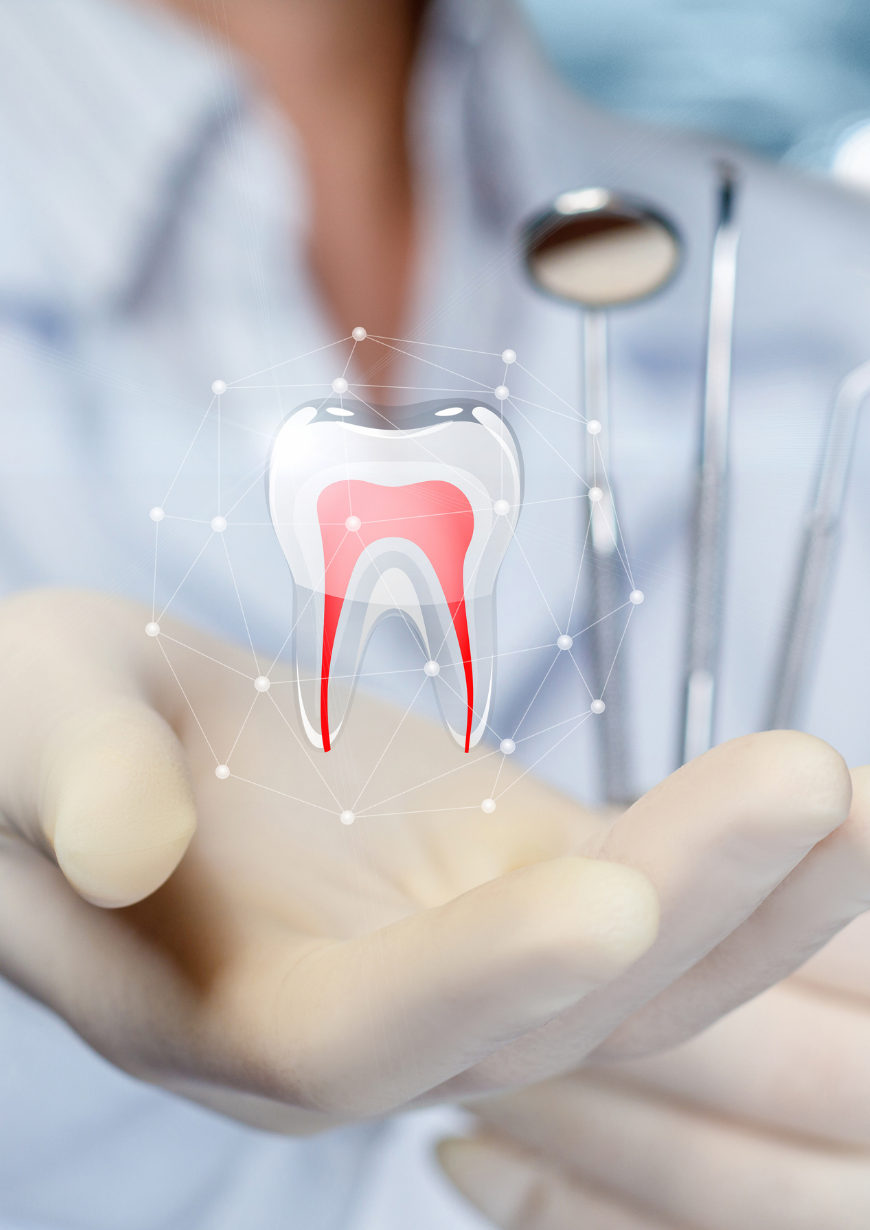
What is Root Canal Treatment?
Root canal treatment (endodontic treatment) is the process of cleaning the nerve tissue (pulp) in the internal structure of the tooth damaged by advanced caries, trauma or infection, and reshaping and protecting it with special filling materials. Thanks to this treatment, a tooth that needs to be extracted can remain healthy in the mouth for many years.
Tooth Structure and Progression of Decay
The tooth consists of three basic layers from the outside to the inside:
- Enamel:The outermost layer of the tooth and the hardest tissue in the body.
- Dentin:A layer under the enamel, softer and closer to the nerves.
- Pulp:A layer of living tissue in the center of the tooth, containing vessels and nerves.
When oral hygiene is not paid enough attention, bacterial plaque accumulates and damages the tooth enamel by producing acid. As the decay progresses, it first affects the enamel, then the dentin and finally the pulp layer. When the pulp is damaged, it causes problems such as severe pain, hot-cold sensitivity and abscess formation. In this case, root canal treatment is necessary to save the tooth.
- Expert Team
- Personalized Treatment Plan for Each Patient
- Long Term Solution
- Advanced Technology Utilization
Bloomıng Smıles
In which cases is root canal treatment performed?
Advanced tooth decay
Tooth trauma (fracture, crack or damage after impact)
Tooth abscesses and infections
Severe heat-cold sensitivity
Nerve damage caused by gum disease
Bloomıng Smıles
Root Canal Treatment Process
1
Examination and X-ray
The condition of the tooth is assessed and x-rays are used to determine the condition of the root canal system and the extent of the infection.
2
Anesthesia and Tooth Numbing
Root canal treatment is performed completely painlessly under local anesthesia.
3
Pulp Cleaning and Canal Shaping
The damaged nerve tissue is cleaned, the infected tissue is removed and the inside of the tooth is shaped and disinfected.
4
Channel Filling and Closing
The canal cavity is filled with a special biocompatible filling material and the inside of the tooth is completely sealed.
5
Reinforcement with Crown or Filling
After root canal treatment, a composite filling or ceramic crown is applied to increase the durability of the tooth. Zirconium or porcelain crowns are preferred for teeth with extensive material loss.
Advantages of Root Canal Treatment
- Prevents tooth extraction and preserves the natural tooth
- Restores chewing function
- Eliminates pain completely
- Offers an aesthetic and functional solution
- An effective method for long-term dental health
Things to Consider After Root Canal Treatment
Mild pain and tenderness after treatment is normal, but should subside within a few days.
Very hard foods should be avoided for the first 24 hours.
Regular brushing and flossing is important to avoid damaging your teeth.
Periodic check-ups recommended by your dentist should not be neglected.
we are here for all your questions
We are ready to help you with all aspects of your dental health.
Is root canal treatment painful?
No, root canal treatment is performed under local anesthesia and no pain is felt during the procedure.
Is there pain after root canal treatment?
There may be a slight pain or tenderness after the procedure, but this is usually short-lived and passes.
Is root canal treatment permanent?
Yes, root canal treatment done correctly is long-lasting and offers an effective solution to save the tooth.
Contact us for more information!
Explore our easy-to-reach contact options to answer your questions and book an appointment.